OK if you know all there is to know about Programmatic Buying, you might want to just hop, skip and jump right past this post then. I will follow up with another Programmatic post in future which might be more appealing to you. However, if you keep hearing all this talk about Programmatic Buying but are not sure what it really means, what the fuss is all about, why you would use it for your advertising and how it would work?! – then grab a cuppa, settle down and enjoy this 8 minute read!
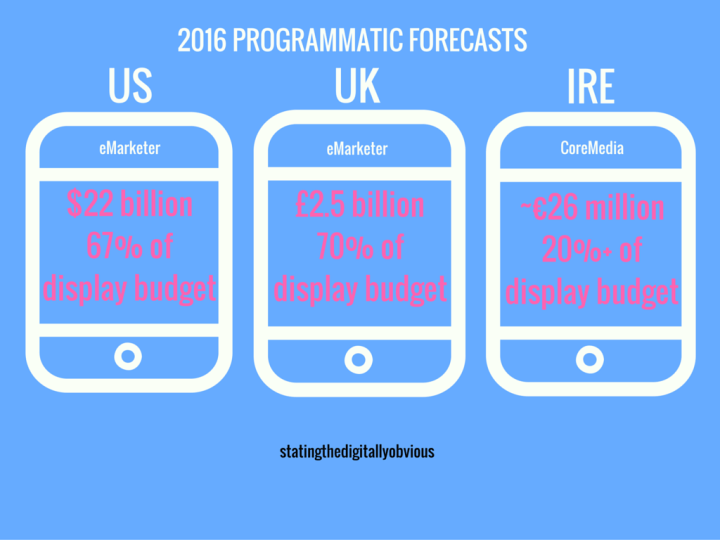
Once upon a time in a Galaxy far far away… just kidding! Not so long ago, circa 2008, inventory available via global ad exchanges (programmatic inventory) was referred to as remnant inventory. In simple terms, it was inventory ‘deemed’ to be low quality and which publishers were unable to sell so it was sold through the ad exchanges at much lower costs to advertisers. Arguably there were also other economic benefits for doing it this way which I won’t delve into right now. Fast forward to today, programmatic technology has evolved and is allowing advertisers and marketers to deliver very targeted and effective campaigns across multiple digital channels. This smarter spending has resulted in trajectory growth of programmatic buying over the past 3 years in particular. This year (2016) programmatic buying is expected to grow to $22 billion in the US market, accounting for 67% of the digital display spends. The programmatic market in the UK is expected to be worth £2.5 billion, accounting for upto 70% of the digital display market. In Ireland, we expect programmatic to account for more than 20% of the digital display market, circa €26 million worth.
So what is driving this growth and what’s all the fuss about? Here is the WHAT, WHY and HOW on programmatic buying!
WHAT is it? Let’s start with defining what programmatic buying is:
It’s defined by Rubicon as advertising space which is bought on an impression-by-impression basis through automated technologies which use data-driven decisioning.
In lay man’s terms, it’s the automation of media buying through digital platforms. It allows for much more efficient buying and real time decisions on costs, placements and timing.
WHY would you use programmatic buying? As marketers and advertisers we are all about efficiency and showing great ROI for our activity. Programmatic buying enables us to add a layer of data (1st or 3rd party), which enhances its precision. It ensures we are reaching the most qualified users and engaging them with the most relevant advertising at the most relevant time. Here are some of the reasons why as an advertiser you should be using programmatic buying:
- Efficiency – simplified campaign processes which are every Ad Ops Manager’s dream! Efficiency means much easier and streamlined trafficking, quicker execution, less manual work, increased transparency and better troubleshooting tools.
- Performance – more focus is given to optimising campaigns for best ROI as reach and frequency can be managed by consolidating media buys in one tool.
- Precision – means customizing your campaigns using the 1st & 3rd party data you have (audience, geo, time, language, frequency etc).
- Quality – through the programmatic direct deals there are added benefits. Buyers have priority access to unique inventory while maintaining all of the above benefits of programmatic.
- Control – programmatic direct deals also maintain a level of control for advertisers or marketers. Instead of having your ads appear across a huge network of publisher inventory, programmatic direct allows buyers to choose where their activity runs during the campaign.
HOW is programmatic inventory bought? There a number of ways this inventory can be accessed by buyers. Doubleclick suggests the below:
- through open auctions via the global ad exchanges where hundreds of buyers compete for the inventory. Inventory is not guaranteed;
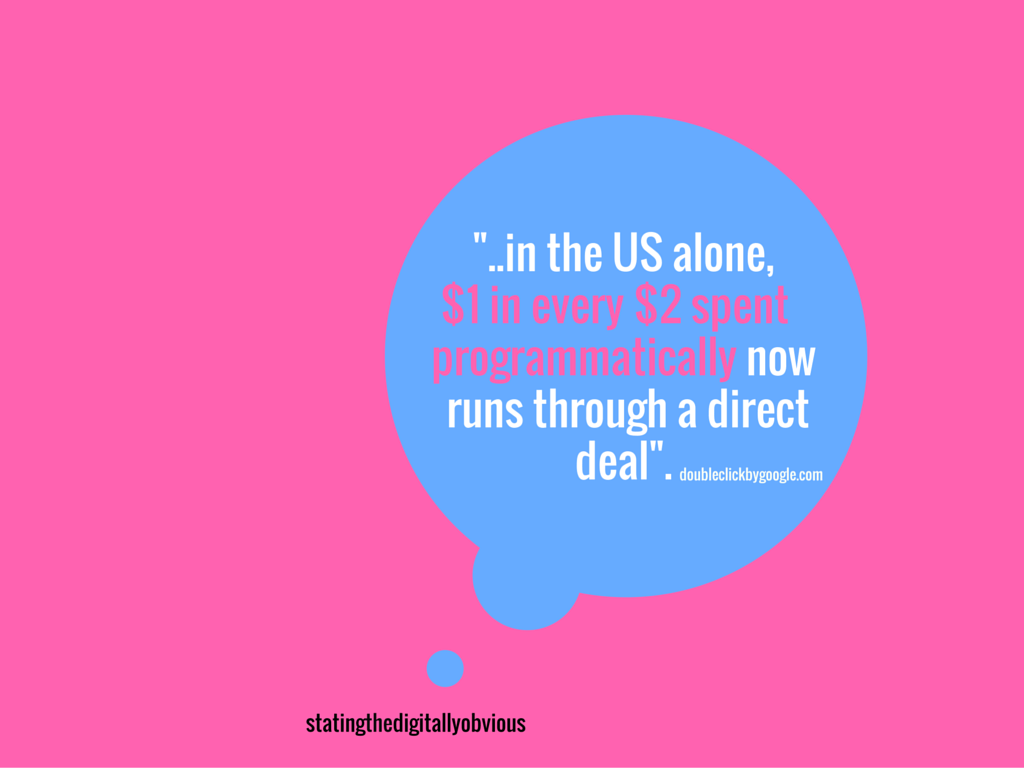
- alternatively as is the case more now, through programmatic direct deals which allow advertisers and publishers to agree on all or either of the 3 direct ways when purchasing inventory: through a private auction, or through preferred deals and or through guaranteed deals. Inventory will range from being non-guaranteed to guaranteed and the costs will vary from being negotiated to being fixed depending on the deal(s) agreed upon.
- and finally through private marketplaces or traditional tag based sites, where publishers and advertisers agree specific buys like HPTOs or specific site section buys. The level and quality of inventory is guaranteed.

Mobile and Video will be the drivers of programmatic buying for the next few years as advertisers align their buying with the ever changing consumer habits. In addition to this, it will be interesting to see how programmatic buying expands to other media types like TV, Digital OOH etc. Finally, below are some examples of Open Auction Ad Exchanges across digital channels. Increasingly buyers prefer to purchase inventory across exchanges that facilitate cross-channel buys as data can be controlled from one source, e.g across display, mobile, video and social.
Display – LinkedIn, AdConductor, AOL, Index, eBay, Sovern, AppNexus, DoubleClick, Google Display Network, LiveIntent, Microsoft Advertising, OpenX, PubMatic, PulsePoint, RightMedia, Rubicon, Yahoo!, GumGum
Social – Facebook, Twitter
Video – AdapTV, BrightRoll, LiveRail, SpotXchange, YouTube
Mobile – AppNexus, DoubleClick, Millennial Media, MoPub, NexAge
Sources:
DoubleClick
Rubicon
Chango
eMarketer
Core Media Outlook 2016
TechCrunch
Was this post helpful? Comment below.
 stating the digitally obvious
2 thoughts on “Programmatic Buying: the basics without the fuss”